The Ultimate New Smyrna Beach Family Photographer Guide: Best Photo Spots, Tips & Planning
Your Complete Resource for Planning Perfect Beach Family Photos
Planning family photos can feel deceptively simple. On the surface, it sounds easy enough: pick a beach, show up, smile, and you’re done. In reality, families quickly discover there’s a lot more to consider—especially when children, weather, timing, and expectations are involved.
If you’re searching for a New Smyrna Beach family photographer guide, you’re likely looking for something specific. Most families who land here aren’t interested in stiff poses, forced smiles, or sessions that feel rushed and stressful. They want images that feel natural. Honest. Calm. Photos that look like their family—not a version of themselves trying to behave for the camera.
This comprehensive New Smyrna Beach family photographer guide walks you through the entire process from start to finish. Not in a salesy way, and not in a vague “trust me, it’ll be fine” way—but in a clear, realistic, planning-focused way that answers the questions families actually have before booking.
Whether you’re visiting New Smyrna Beach on vacation or you live nearby and want to document this season of life, this guide covers everything: the best photo spots, what to wear for beach photos, sunrise vs sunset timing, and all the family photo tips you need for a successful session.

Why New Smyrna Beach Is an Ideal Location for Family Photos
Key Takeaway: New Smyrna Beach offers wide, uncrowded shorelines, consistently flattering light, and a calm atmosphere that helps families relax—resulting in more authentic photos.
New Smyrna Beach offers something that many Florida beaches don’t: space. And not just physical space along the shoreline, but emotional space as well. The beach feels slower, quieter, and less overstimulating than many other coastal destinations.
The shoreline is wide, which gives families room to move without constantly worrying about other people in the background. The dunes are natural and textured rather than overly manicured. The overall atmosphere feels lived-in instead of tourist-heavy.
For families, this matters more than they often realize. When kids don’t feel confined, they behave more naturally. When parents don’t feel rushed or watched, they relax. And when everyone feels at ease, the photos reflect that.
From a photography perspective, New Smyrna Beach provides consistently flattering light, natural color palettes, and enough variety in scenery that sessions don’t feel repetitive. The Atlantic-facing coastline means consistent light patterns throughout the year, while the protected dune systems create natural backdrops that add dimension without overwhelming the subjects.
The sand itself photographs beautifully here. It’s not blindingly white like some Gulf Coast beaches, nor is it heavily compacted. The subtle golden and taupe tones create a neutral foundation that complements skin tones across all ages and complexions. This matters more than most families realize when they’re choosing a location.
From a family perspective, New Smyrna Beach allows photos to feel like time spent together rather than a performance. There’s enough to explore that children stay engaged, but not so much stimulation that they become overwhelmed. Parents can actually be present instead of constantly managing their kids’ behavior or worrying about logistics.
How New Smyrna Beach Family Photos Differ From Other Florida Beaches
Key Takeaway: Unlike crowded beaches like Clearwater or Cocoa, New Smyrna offers predictable light, natural textures, and space to move—creating calmer sessions and more timeless images.
Not all Florida beaches photograph the same way, even if they look similar online. New Smyrna Beach differs from places like Clearwater, Cocoa Beach, or Panama City in subtle but important ways that directly affect how your photos turn out.
One of the biggest differences is crowd flow and spacing. New Smyrna’s beaches are wide and naturally segmented, which means photographers can work with open space instead of constantly adjusting angles to avoid people in the background. This is especially important for families with young children who like to wander or explore. At more crowded beaches, photographers often spend valuable session time repositioning or waiting for clear backgrounds, which adds pressure and reduces the relaxed flow that creates genuine moments.
Another key difference is light consistency. The orientation of the shoreline creates more predictable light patterns at both sunrise and sunset. Instead of racing against harsh shadows or rapidly changing light, sessions can unfold calmly. This reduces pressure and allows more flexibility during the session. Photographers can follow the family’s energy rather than chasing optimal light conditions, which results in images that feel more authentic.
Natural texture also plays a major role. Dunes, sea oats, driftwood, and softer sand tones add depth without overpowering the people in the frame. These elements help create images that feel timeless rather than overly styled or trendy. Unlike beaches with heavy development visible in the background or overly manicured landscapes, New Smyrna Beach provides organic texture that ages well in photographs.
The water color at New Smyrna Beach offers another advantage. The Atlantic waters here range from deep teal to soft aqua depending on conditions, providing beautiful color without the artificially vibrant turquoise that can sometimes overwhelm images and date them to a specific editing trend.
Finally, there is an emotional pacing to New Smyrna Beach that sets it apart. The area simply feels quieter. That slower energy affects how families move, interact, and connect during a session. Less stimulation leads to more genuine moments, which is exactly what most families want from their photos. Children aren’t distracted by constant activity, and parents aren’t self-conscious about being watched by crowds of beachgoers.

Understanding the New Smyrna Beach Geography for Photo Planning
Key Takeaway: Different areas of NSB offer distinct vibes—from dramatic northern jetties to accessible central Flagler Avenue to wild southern stretches. Choose based on your priorities: convenience, natural beauty, or distinctive landmarks.
New Smyrna Beach stretches for miles along Florida’s central Atlantic coast, and different areas offer distinct characteristics that affect both the photography experience and the final images.
The northern end, near the inlet and Ponce de Leon Inlet Lighthouse, tends to have more dramatic elements like jetties and rocks. This area works well for families who want variety and don’t mind a bit more visual interest in their backgrounds. The lighthouse itself, while not always included in beach family sessions, creates a distinctive sense of place for families who want their photos to clearly represent New Smyrna Beach.
The central beach area, around Flagler Avenue beach, offers the most accessible beachfront with convenient parking and facilities. This is often the most practical choice for families with very young children or those who prefer not to walk far from their vehicles. While it can see more foot traffic, early morning and evening sessions still provide plenty of open space.
The southern stretches, including areas near Smyrna Dunes Park and extending toward Canaveral National Seashore, offer the most natural, undeveloped feel. These areas are ideal for families seeking a completely organic backdrop with minimal signs of development. The trade-off is that parking may require a short walk, and facilities are more limited.
Understanding these geographical differences helps families choose a location that matches their priorities, whether that’s convenience, natural aesthetics, or distinctive landmarks.
Sunrise vs Sunset: Choosing the Best Time for Your Family Photos
Key Takeaway: Sunrise = calmer, cooler, empty beaches (best for young kids). Sunset = warmer tones, dramatic skies, more energy (best for older kids/teens). Choose based on your family’s natural rhythm, not what’s “better.”
One of the most common questions in any New Smyrna Beach family photographer guide is whether sunrise or sunset is better for beach photos. The truth is that both can work beautifully, but the right choice depends entirely on your family’s natural rhythm.
Sunrise Sessions: Benefits and Considerations
Sunrise sessions tend to be calmer and quieter. The beach is usually empty or nearly empty, which creates a peaceful atmosphere from the moment you arrive. The light at sunrise is soft and even, making it easier to photograph a wide range of moments without rushing. Morning light has a cooler, clearer quality that many families prefer for its clean, fresh appearance.
Sunrise is often ideal for families with young children who wake early and do better before the stimulation of the day sets in. Toddlers and preschoolers especially tend to be more cooperative in the morning, before they’re tired from a full day of activities. For visiting families, sunrise sessions also leave the entire day free for other vacation plans.
The challenge with sunrise is the early wake-up call, which can be difficult for families not naturally inclined to early mornings. However, families who choose sunrise almost universally report that it was worth the effort. The peaceful atmosphere and beautiful light create an experience that feels special and unhurried.
Sunset Sessions: Benefits and Considerations
Sunset sessions offer warmer tones and more dramatic skies. They tend to feel more playful and energetic, especially for older kids or extended families. The golden hour light creates a warm glow that many families associate with classic beach photography. Skies at sunset can range from soft pastels to vivid oranges and pinks, adding visual drama to the final gallery.
Sunset sessions work well for families who prefer evenings and don’t mind a bit more activity around them. They’re often easier logistically for families who struggle with early mornings or who have scheduled daytime activities. Older children and teenagers typically prefer sunset sessions, as they align better with their natural sleep schedules.
The shifting light at sunset can add visual variety to the final gallery, but it also requires more flexibility from families. The optimal light window is relatively brief, so families need to arrive on time and be ready to begin promptly. Late arrivals can significantly impact the quality of light available.
Temperature Considerations for Sunrise vs Sunset
Temperature is another consideration in the sunrise vs sunset debate. Sunrise sessions in Florida tend to be cooler, which is often more comfortable, especially during summer months. Sunset sessions can still be quite warm, particularly in summer, though the temperature typically drops as the session progresses.
Neither option is inherently better. The best choice is the one that aligns with your family’s schedule, energy level, and tolerance for crowds and temperature. Families with mixed ages—such as toddlers and teenagers together—may need to compromise, choosing whichever time works best for the most challenging age group.
Choosing the Right Season for New Smyrna Beach Family Photos
Key Takeaway: Spring and Fall offer ideal conditions with mild temps and fewer crowds. Summer works for sunset sessions despite heat. Winter provides cooler weather and the quietest beaches. Book peak seasons (spring/summer) 2-3 months ahead.
Florida may not have four traditional seasons, but timing still matters significantly. Each part of the year offers a slightly different experience, and understanding those differences can help you plan a session that feels comfortable rather than stressful.
Spring (March through May)
Spring typically brings mild temperatures and lower humidity. Daytime temperatures range from the mid-70s to mid-80s, with comfortable evenings. The light during spring has exceptional clarity, and the moderate temperatures make it comfortable for families to spend time outdoors without excessive heat or cold. Spring is an ideal time for families with young children and one of the most popular booking windows. Because of this, availability can fill quickly, sometimes months in advance. Beach access can also be busier during spring break periods, which typically fall in March and early April.
Summer (June through August)
Summer brings warmer temperatures and later sunsets. While the heat can be more intense, with daytime temperatures regularly reaching the 90s and high humidity, sunset-only sessions often work well during this time. The later sunsets during summer (often after 8 PM) mean sessions can be scheduled when temperatures have started to cool slightly. Families who are comfortable with warm weather and want that golden summer glow often love summer sessions. Summer also brings afternoon thunderstorms, which typically clear by evening but require flexibility in scheduling. The beach tends to be busiest during summer months, particularly around holidays like July 4th.
Fall (September through November)
Fall is one of the most underrated times for beach photos. Crowds thin out significantly after Labor Day, the light becomes softer as the sun’s angle changes, and temperatures remain comfortable without the intensity of summer. Early fall can still be quite warm, but by October and November, conditions become ideal. Fall works especially well for extended family sessions or families looking for a quieter experience. Hurricane season extends through November, so weather monitoring becomes more important during early fall months.
Winter (December through February)
Winter offers cooler evenings, earlier sunsets, and beautifully neutral light. Daytime temperatures typically range from the 60s to low 70s, with cooler evenings that may require light layers. It’s a great option for families visiting from colder climates who find Florida winter temperatures pleasant, or locals who prefer cooler temperatures. Winter light has a unique quality in Florida—softer and more diffused than summer’s intensity. The beach is typically least crowded during winter, providing the most privacy and space. However, winter weather can be less predictable, with occasional cold fronts bringing significantly cooler temperatures and wind.
Each season also affects what to wear for beach photos. Spring and fall allow the most wardrobe flexibility, while summer requires lighter fabrics and winter may call for layering options.
Booking earlier during peak seasons allows for more flexibility with timing and location options. During less busy seasons, families often have more scheduling options and can sometimes book with shorter notice.
Best Photo Spots: Top Locations for New Smyrna Beach Family Photos
Key Takeaway: The three best photo spots are Smyrna Dunes Park (most versatile with dunes + beach + jetty), Flagler Avenue Beach (most convenient with facilities), and Canaveral National Seashore (most natural and private). Each serves different family needs.
Choosing among the best photo spots in New Smyrna Beach is less about popularity and more about how your family naturally interacts. Different locations lend themselves to different types of movement and energy, and understanding these nuances helps create a session that feels natural rather than forced.
<div id=”smyrna-dunes-park”></div>
Smyrna Dunes Park: The Most Versatile Location
Smyrna Dunes Park is one of the most versatile and best photo spots in New Smyrna Beach. Located at the northern tip of the barrier island, this park offers boardwalks through the dunes, open beach areas, jetty views, and dog-friendly access. This variety allows sessions to flow naturally without needing to relocate. The boardwalks provide elevated perspectives and natural leading lines, while the beach areas offer traditional coastal backdrops. The jetty adds visual interest and a sense of place unique to this location.
The park requires a small entry fee per vehicle and has specific hours, which is important to note when planning sunrise sessions. Parking is ample and relatively close to the beach, making it practical for families with small children or those carrying beach items. The dunes here are particularly photogenic, with established sea oats and native vegetation that add texture and dimension to images.
Families with dogs often prefer Smyrna Dunes Park because pets are welcome in certain areas. For families where the dog is an important part of the family unit, this location removes the stress of coordinating separate sessions or leaving a family member behind.
Flagler Avenue Beach: Classic Coastal Convenience
Flagler Avenue beach provides a classic coastal look with a bit more energy. Located in the heart of New Smyrna Beach’s downtown area, this access point offers convenience and a mix of beach and town elements. The beach here is wide and accessible, with nearby parking and facilities including restrooms and changing areas.
This location works well for families who want a mix of beach and town elements in their photos and enjoy a livelier atmosphere. The proximity to shops and restaurants also makes it convenient for families combining their photo session with other activities. Evening sessions here benefit from beautiful westward views as the sun sets behind the town.
The trade-off is that Flagler Avenue beach sees more consistent foot traffic than more remote locations. However, the wide beach still provides ample space, and the energy of the area can actually enhance the experience for some families, particularly those with older children or teenagers who appreciate the more social atmosphere.
Canaveral National Seashore: Natural, Undeveloped Beauty
Canaveral National Seashore is quieter and more natural, with wide dunes and fewer visual distractions. As a protected area, development is minimal, creating an untouched coastal environment. The beach here stretches for miles with minimal foot traffic, especially outside peak summer months.
This location is ideal for families who prefer simplicity and want their images to feel untouched and organic. The natural preservation of this area means dunes are more dramatic, vegetation is abundant, and the overall aesthetic is completely organic. There are no buildings, boardwalks, or man-made structures visible in most areas, creating a timeless quality in photographs.
Access to Canaveral National Seashore requires a fee per vehicle and has specific entry points. The walk from parking to the beach can be longer than at other locations, which is important to consider with very young children. However, the payoff is significant for families seeking the most natural backdrop possible.
27th Avenue Beach Access: The Middle Ground
27th Avenue Beach Access and other mid-beach locations offer a middle ground between the convenience of Flagler Avenue beach and the natural remoteness of the national seashore. These residential beach access points provide good parking, relatively short walks to the beach, and fewer crowds than the main tourist areas while still maintaining easy accessibility.
These locations work particularly well for local families or those staying in nearby vacation rentals who prefer familiar, convenient access points. The beaches here maintain the natural beauty characteristic of New Smyrna Beach while offering practical amenities.
Location guidance is always part of the planning process so families don’t have to guess which of the best photo spots will suit them best. Factors like the family’s comfort with walking distances, preference for crowds versus privacy, and desire for specific natural elements all play into the location recommendation.

What to Wear for Beach Photos: Complete Wardrobe Guide
Key Takeaway: Soft neutrals (cream, beige, sage, dusty blue) photograph best. Coordinate colors rather than match exactly. Choose lightweight, flowing fabrics. Avoid logos, bright white, and true black. Comfort matters more than perfection.
What to wear for beach photos has a significant impact on how images feel, both immediately and years later. The goal isn’t to look styled or trendy, but to look comfortable and cohesive in a way that keeps the focus on the people and their connections rather than their clothing.
Best Colors for Beach Photography
Soft neutrals and muted tones tend to photograph best at the beach. Colors like cream, soft white, beige, tan, sage, dusty blue, blush, and muted coral all complement the natural beach environment without competing with it. These tones work harmoniously with the sand, water, and sky, creating a cohesive color palette that feels intentional but not forced.
Avoiding bold logos, busy patterns, and heavy graphics helps keep the focus on the people rather than clothing. While a small pattern or subtle texture can add visual interest, large prints or prominent branding can date photos and distract from faces and expressions.
True black and bright white are generally less flattering than softer alternatives. Black can appear harsh against the bright beach environment and tends to absorb light in ways that flatten the image. Stark white can blow out in bright conditions or create too much contrast. Instead, charcoal, navy, cream, and soft white work better while still providing light and dark tones for variety.
Coordinating vs. Matching
Mixing textures instead of matching outfits exactly adds depth without feeling forced. A linen shirt paired with a cotton dress, or a knit top with flowing pants creates visual interest through varied materials. This approach looks more sophisticated than perfectly matched outfits and allows each family member’s personality to show through.
Coordinating rather than matching has become the preferred approach for family photos. This means choosing a color palette and letting each person wear something within that palette that suits their style and comfort level. For example, if the palette is cream, sage, and denim, one person might wear cream linen pants with a sage shirt, another might wear a cream dress, and a child might wear denim shorts with a cream tee. Everyone coordinates without looking overly orchestrated.
Clothing Styles and Fabrics
The length and style of clothing also matters. Flowy dresses and skirts photograph beautifully at the beach, creating movement and softness in images. Maxi dresses work particularly well, though knee-length or midi options are also lovely. For men and boys, linen pants or well-fitted shorts with button-down shirts or henleys create a polished but relaxed look.
Avoiding overly casual athletic wear helps elevate the overall feel. While comfort is crucial, families typically prefer photos where everyone looks intentionally dressed rather than like they just came from the gym. This doesn’t mean formal wear—beach sessions should never feel stuffy—but rather clothing that’s a step above everyday casual.
Bare feet or simple sandals work well on the sand and help maintain a relaxed look. Avoiding bulky shoes or sneakers keeps the aesthetic clean and beachy. If someone prefers foot covering, simple leather sandals or minimal footwear works better than athletic shoes.
Lightweight fabrics move naturally in coastal breezes, adding softness and authenticity to images. Linen, cotton, rayon, and other breathable materials are comfortable in Florida’s climate and create beautiful movement in photos. Heavy fabrics like thick denim or synthetic materials that don’t breathe can be uncomfortable and don’t move as gracefully.
Layers and Accessories
Layers can add dimension and provide options if temperatures change. A light cardigan, denim jacket, or linen button-down shirt can be added or removed to create variety in looks and help everyone stay comfortable as conditions shift from warmer to cooler during sunset sessions.
For families with babies and toddlers, comfort and ease of movement should be the priority. Avoid anything with scratchy materials, tight waistbands, or uncomfortable details. A fussy child in an uncomfortable outfit will dominate the session, while a comfortable child in simple, soft clothing will be free to move and interact naturally.
Families receive personalized wardrobe guidance before their session to help everything come together naturally. This typically includes specific recommendations based on skin tones, the season, the chosen location, and the overall aesthetic the family prefers.
What a New Smyrna Beach Family Session Actually Feels Like
Key Takeaway: Sessions are lightly guided, not rigidly posed. Kids are encouraged to move and explore. The focus is on genuine interaction, not performance. The pace adapts to your family’s natural rhythm.
Many parents worry that family photo sessions involve constant posing and strict direction. They imagine standing stiffly while a photographer barks instructions, forcing smiles, and bribing children to cooperate. In reality, sessions at New Smyrna Beach are designed to feel calm and flexible, more like documented time together than a formal photoshoot.
Sessions are lightly guided rather than rigidly posed. Instead of positioning everyone precisely and demanding they hold still, guidance comes in the form of gentle prompts that encourage natural interaction. “Walk toward me together,” “Show me how high you can jump,” or “Tell your kids your favorite thing about this vacation” creates authentic moments rather than forced expressions.
Children are encouraged to move, explore, and interact naturally. Rather than asking a toddler to sit still and smile at the camera—an expectation that’s developmentally unrealistic and creates frustration—sessions incorporate the movement that children naturally want to engage in. Running toward the water, collecting shells, drawing in the sand, or being swung between parents all create genuine joy that translates into meaningful images.
Parents aren’t expected to perform or force moments. The guidance recognizes that families don’t need to create artificial happiness—they need space to experience authentic connection. This might look like walking quietly together, with parents talking naturally while their hands are held, or sitting in the sand with a child while they play. These unforced moments reveal real relationships rather than manufactured ones.
The focus is on movement, connection, and genuine interaction. Sessions flow from one activity to another with minimal interruption. There might be moments of walking, pausing to look at something together, gentle play, quiet conversation, and simple togetherness. This variety creates visual diversity in the final gallery while keeping the experience feeling natural.
Those in-between moments—small gestures, shared laughter, quiet pauses—are often the most meaningful parts of the final gallery. The way a mother smooths her daughter’s windblown hair, a father’s hand resting on his son’s shoulder, siblings whispering to each other, or the quiet moment before everyone bursts into laughter often become the images families treasure most.
The pace of the session adapts to the family rather than forcing the family to adapt to a rigid timeline. If children need a moment to warm up, there’s space for that. If a particular interaction is creating beautiful moments, the session lingers there rather than rushing to the next activity. This flexibility allows the session to unfold organically.
Conversation happens throughout the session, keeping the atmosphere relaxed and helping families feel like they’re spending time with someone who cares about them rather than being processed through a transaction. This conversational approach helps children relax, gives parents something to focus on besides “performing,” and creates opportunities for genuine expression.

Family Photo Tips: How to Prepare Kids for Beach Sessions (Without Stress)
Key Takeaway: Keep expectations low. Don’t over-hype the session. Let kids know they can move and play. Time sessions around naps/meals. When parents stay relaxed, kids follow. Perfect behavior isn’t required for great photos.
One of the biggest concerns parents have is how their children will behave during photos. These family photo tips will help you understand that kids don’t need to sit still or follow instructions perfectly for photos to be successful. In fact, some of the most beloved images come from moments when children are being completely themselves.
Set Realistic Expectations
The most effective preparation is keeping expectations low. Avoid building up the session as a big, important event that requires perfect behavior. Instead, frame it casually: “We’re going to the beach to take some pictures. You can play and explore like usual.” This removes pressure and helps kids approach the session with their normal energy rather than performance anxiety.
Let kids know they can move and explore. Children who understand that sitting still isn’t required are more likely to cooperate when gentle guidance is needed. Explaining that they’ll get to run, jump, and play helps them look forward to the session rather than dreading it.
Avoid Pressure and Over-Hyping
Avoid over-hyping the session or placing pressure on them to behave a certain way. Comments like “You need to smile and be good for the pictures” or “We’re paying a lot of money for this, so you’d better cooperate” create anxiety and resistance. Children respond to pressure by shutting down or acting out, neither of which creates good photos.
Bring Comfort Items if Needed
Bringing comfort items if needed can help younger children feel secure. A favorite stuffed animal, blanket, or toy can be incorporated into a few images and then set aside. Having something familiar can ease the transition into an unfamiliar situation.
Work With Your Family’s Natural Rhythm
Timing the session around normal routines increases the likelihood of cooperation. If naps are important, don’t schedule during nap time. If evening meltdowns are common, sunrise might work better. Working with your family’s natural rhythm rather than against it makes a significant difference.
Feeding children before the session helps avoid hunger-related crankiness. Having a small snack available for afterward can also serve as a gentle motivator if needed, though sessions are structured so that bribery isn’t necessary.
Trust the Process
Trusting the process makes a significant difference. When parents are anxious about their children’s behavior, kids pick up on that anxiety and often respond by becoming more difficult. When parents stay relaxed and trust that the session will work regardless of perfect behavior, children usually mirror that calmness.
Beach sessions are built around motion—walking, playing, exploring—not stillness. This structure naturally accommodates children’s energy levels and attention spans. Instead of fighting against their natural inclination to move, sessions harness that energy to create authentic moments.
When parents stay relaxed, children usually follow. Kids are remarkably perceptive and respond to their parents’ emotional state. A parent who is genuinely at ease creates an atmosphere where children can relax and be themselves.
What Parents Often Worry About (and Don’t Need To)
Many parents worry about things that simply don’t matter in the final images. These concerns, while understandable, often create unnecessary stress and distract from the experience itself.
Perfect smiles aren’t necessary for meaningful photos. In fact, natural expressions—concentration, wonder, laughter, even serious moments—often create more powerful images than forced smiles. A photograph of a child completely absorbed in examining a shell can be far more meaningful than one where they’re staring at the camera with a manufactured grin.
Everyone looking at the camera at the same time is not a requirement. While a few images with everyone’s eyes on the camera can be nice for holiday cards, the gallery as a whole should represent how your family actually interacts. That includes looking at each other, looking away, and being engaged in various moments.
Kids getting sandy is inevitable at the beach and adds to the authenticity of the images. Sandy hands, feet, and knees are part of the beach experience. Attempts to keep children pristine during a beach session create stress for everyone and result in images that feel overly controlled.
Hair blowing in the wind is a natural part of beach photography. While extreme wind can be challenging, gentle coastal breezes create movement and softness in images. The occasional flyaway hair doesn’t ruin photos—it makes them feel real.
Outfits staying pristine isn’t the goal. Children who sit in the sand, run through shallow water, or otherwise engage naturally with the environment may end up with slightly rumpled clothing or sandy fabric. These elements tell the story of time spent at the beach together.
Those elements are not mistakes. They’re part of what makes beach images feel real and reflective of life with kids. Parents who embrace imperfection often end up with galleries they love more than they expected because the images genuinely look like their family rather than a staged version of their family.
Understanding Different Family Dynamics and How They Affect Sessions
Every family operates with its own unique dynamic, and recognizing this helps create appropriate expectations for the session. There’s no single right way for a family to interact, and sessions are most successful when they honor each family’s natural way of being together.
Families with babies (newborn through 12 months) require the most flexibility. Babies operate on their own schedules and can’t be reasoned with or redirected like older children. Sessions with babies work best when parents accept that feeding, changing, and soothing will likely be part of the experience. The most successful approach is incorporating these care moments into the session rather than fighting against them.
Families with toddlers (1-3 years) benefit from sessions that embrace chaos. Toddlers are wonderfully unpredictable, and attempts to control their every move typically backfire. Sessions structured around following their lead—letting them explore with gentle guidance—create the most authentic images. These sessions often include running, collecting treasures, sudden directional changes, and moments of both cooperation and resistance.
Families with young children (4-7 years) often find sessions easiest because this age group typically enjoys activities and can understand simple directions while still being naturally spontaneous. They’re old enough to engage with prompts but young enough to not be self-conscious, creating a sweet spot for authentic interaction.
Families with tweens and teens face different challenges, primarily self-consciousness. Older children often feel awkward or resistant to family photos. The most effective approach is acknowledging their feelings, keeping the tone light, and creating opportunities for them to feel cool rather than embarrassed. Sibling shots, individual moments, and activities that don’t feel posed help teens relax and engage.
Families with wide age gaps need sessions that can shift between different energy levels. Activities that work for the whole group, along with smaller groupings that allow age-appropriate interaction, help everyone participate comfortably. Patience and flexibility become especially important when family members have vastly different capabilities and attention spans.
Blended families may need extra attention to ensure everyone feels equally valued and included. Being mindful of different relationship dynamics and creating opportunities for various groupings helps all family members feel represented.
Extended family sessions require clear planning about groupings and priorities. Knowing in advance which combinations are most important helps the session flow efficiently while ensuring nothing is missed.
What Happens Before, During, and After the Session
Understanding the full process helps families feel prepared and confident going into their session.
Before the session, families receive comprehensive guidance on location, timing, wardrobe, and expectations. This typically begins with a planning conversation where families share their preferences, concerns, and what matters most to them. Based on this conversation, specific recommendations are provided for where to meet, what to wear, and what to expect.
Location scouting information might include details about parking, walking distances, what the area looks like, and what to expect in terms of crowds and conditions. This removes uncertainty and helps families arrive feeling oriented rather than stressed.
Wardrobe guidance is personalized to each family’s style, the season, and the location. Instead of generic advice about what to wear for beach photos, families receive specific suggestions that account for their preferences and concerns.
Timing is confirmed with attention to both light quality and the family’s schedule. Families receive clear arrival instructions including where to park, where to meet, and what time to arrive to ensure the session starts when the light is optimal.
Weather monitoring begins several days before the session, with communication if conditions look questionable. Families are never left wondering whether their session will happen or if they should prepare for rescheduling.
During the session, guidance is gentle and unobtrusive. Direction comes in the form of prompts and suggestions rather than rigid posing. Families are invited to interact naturally while receiving subtle guidance that creates flattering compositions and authentic moments.
Nothing is forced or rushed. If something isn’t working, the approach shifts rather than continuing to push. If a child needs a break, there’s space for that. If a particular interaction is creating beautiful moments, the session lingers there.
Sessions move with the family’s natural rhythm. Some families are naturally high-energy and want to move constantly. Others are quieter and more contemplative. The session adapts to match the family’s energy rather than imposing an artificial pace.
Throughout the session, there’s ongoing communication about what’s happening and what to expect next. This helps families feel involved in the process rather than simply being directed.
After the session, families receive a curated, hand-edited gallery that reflects the experience honestly, without heavy retouching or trendy effects. The editing process prioritizes natural skin tones, true-to-life colors, and a timeless aesthetic that will age well.
The timeline for gallery delivery is communicated clearly, and families receive their images within the promised timeframe. Galleries are delivered digitally through a private online portal where families can view, download, and share their images.
Each image in the gallery has been individually edited and carefully selected to represent the best moments from the session. This curation process removes duplicates and less successful images, leaving families with a gallery that’s cohesive and meaningful without being overwhelming.
High-resolution digital files are included, providing families with the freedom to print images at any size and share them however they choose. There are no restrictions on usage—the images are the family’s to use as they wish.
What Makes a Session Feel High-End Without Feeling Stiff
High-end family photography isn’t about formality. It’s about time, attention, intention, and restraint. Understanding what elevates a session helps families recognize quality and value beyond just the final images.
A high-end session feels unhurried. Families aren’t cycled through a formula or rushed through a checklist of poses. Instead, they’re observed and guided thoughtfully. There’s time to let moments develop naturally, to try different approaches, and to simply be together without pressure.
Attention to detail shows in subtle ways. The selection of locations within the session area, the awareness of light and how it’s changing, the gentle guidance that flatters each family member, and the observation of natural moments all require experience and skill. This attention isn’t obvious or showy—it simply results in better images.
Intention means that every aspect of the session has been considered. From the recommended arrival time to the suggested wardrobe palette to the flow of activities, nothing is random. This intentionality creates a cohesive experience and gallery.
Restraint is equally important. High-end work knows when to step back and let moments unfold without interference. It knows when less direction creates better results. It avoids over-processing images or forcing trendy styles that will date quickly.
The planning process itself reflects quality. Families aren’t left to figure things out on their own or given generic advice that could apply to anyone. They receive personalized guidance based on their specific situation, creating confidence and reducing stress.
The experience during the session demonstrates value. Patience, kindness, genuine interest in the family, and the ability to work well with children all contribute to an experience that feels valuable beyond just the photos. Families should feel cared for, not processed.
The final product shows quality in both the selection and the editing. Images are carefully curated so families receive a strong, cohesive gallery rather than hundreds of mediocre photos to sort through themselves. The editing is sophisticated but not overdone, creating images that look polished while still feeling authentic.
Understanding Image Delivery and Editing Style
Editing should enhance images, not distract from them. Understanding what editing can and should accomplish helps families set appropriate expectations and appreciate the final results.
Final images are hand-edited with attention to skin tones, light, and consistency. Each image receives individual attention rather than being processed through automated filters or presets. This ensures that skin tones look natural across different lighting conditions, that each family member is represented accurately, and that the overall gallery has a cohesive feel.
The goal is a timeless look that still feels relevant years later, not something overly filtered or trendy. Editing styles that rely heavily on current trends—extreme faded looks, heavy orange tones, oversaturated colors—may look appealing now but often feel dated within a few years. A classic, natural approach ages better and allows the people and moments to remain the focus.
Colors remain true to life while being optimized for visual appeal. The blue-green tones of the ocean, the golden warmth of sunset light, and the natural colors of skin and clothing are preserved and enhanced rather than artificially altered. This creates images that look like the place and the people you remember, just refined.
Exposure and contrast are balanced to bring out detail without looking artificially processed. Shadows retain detail, highlights aren’t blown out, and the overall tonal range feels natural. This technical precision happens behind the scenes, resulting in images that simply look right without drawing attention to the editing itself.
Retouching is minimal and focused on temporary distractions rather than changing how people look. A scraped knee from earlier in the day might be softened, or a stray hair removed, but faces, bodies, and natural features remain unchanged. The goal is for families to recognize themselves authentically, not to create an idealized version that doesn’t reflect reality.
Skin tones receive particular attention because they’re one of the most challenging aspects of beach photography to get right. The bright, reflective environment of the beach can create color casts that make skin look orange, pink, or washed out. Careful editing corrects these issues while maintaining the warmth and glow that makes beach photos appealing.
How Long Sessions Last and What You Receive
Session length varies depending on the collection chosen, but understanding what’s included in each session helps families select the right option for their needs and expectations.
Most standard family sessions last between 45 minutes to an hour. This timeframe provides enough opportunity to capture a variety of moments, groupings, and interactions without exhausting young children or overstaying the optimal light window. For families with very young children or those who prefer a more condensed experience, this length feels manageable and doesn’t require an extended attention span.
Extended sessions, typically 90 minutes to two hours, work well for larger groups, families who want more variety in locations or wardrobe changes, or those who simply prefer a more leisurely pace. These longer sessions allow time for multiple family groupings, individual portraits, and more exploration of different areas within the location.
Regardless of length, every session includes comprehensive planning guidance before you arrive. This means you’re not figuring out logistics on your own or guessing about what to wear for beach photos. The planning process removes uncertainty and helps you arrive confident and prepared.
The experience itself is designed to feel relaxed rather than rushed. Sessions aren’t packed with constant activity or rigid timelines. There’s room for breaks, adjustments, and simply being present with your family. This unhurried approach is what allows authentic moments to emerge naturally.
After the session, families receive a curated gallery rather than hundreds of unedited images. Curation means each image has been selected intentionally, duplicate moments have been removed, and only the strongest representations of each interaction remain. This results in galleries typically ranging from 50 to 100+ images depending on session length and what unfolds during your time together.
High-resolution digital images are included in every collection, providing families with full rights to print, share, and use their images however they choose. There are no printing requirements, no restrictions on usage, and no hidden costs for accessing your own photos. The images are yours to enjoy however you prefer.
The digital gallery is delivered through a private online portal that’s easy to navigate, mobile-friendly, and allows you to download images individually or all at once. You can share the gallery link with extended family members, and the gallery remains accessible indefinitely for future downloads.
Some collections also include professional prints, custom albums, or other tangible products. These are designed to complement the digital files rather than replace them, giving families heirloom-quality printed pieces while maintaining the flexibility of digital images.
Current session options and pricing details are always available here: https://michellecoombsphotography.com/investment/
How to Decide If a New Smyrna Beach Family Photographer Is the Right Fit
Choosing a New Smyrna Beach family photographer is about more than just liking their work—it’s about finding someone whose approach, style, and values align with what matters most to your family. Before booking, there are several important factors to consider.
How children are portrayed is one of the most telling aspects of a photographer’s work. Look closely at gallery samples and ask yourself: Do the children look genuinely happy and engaged, or do they look like they’re enduring something unpleasant? Are kids allowed to be kids, or is every image of them sitting perfectly still with forced smiles?
Photographers who work well with children understand developmental stages and adjust their expectations accordingly. Their galleries show children laughing, exploring, moving naturally, and interacting authentically with their families. You should see evidence that kids are comfortable and enjoying themselves, not performing under pressure.
Do families look relaxed or overly posed? This distinction is subtle but important. Posed photography has its place, but if you’re seeking natural, authentic images, you need to see evidence that the photographer can create that. Look for variety in expressions—not just smiles, but genuine laughter, thoughtful moments, tender interactions, and even serious expressions. Real life includes all of these, and your photos should too.
Pay attention to body language in the photographer’s samples. Do people look stiff and uncomfortable, or do they look like they’re actually interacting with each other? Are hands and arms positioned naturally, or do they look awkwardly placed? Natural positioning takes skill and experience to guide without making families feel directed.
Is the style consistent across galleries? One beautiful gallery could be the result of a particularly photogenic family or ideal conditions. Consistency across multiple sessions demonstrates that the photographer can reliably deliver quality work regardless of variables.
Look at several full galleries if possible, not just highlight reels. Every session will have standout images, but you want to know that the overall quality remains high throughout. Consistency also extends to editing style—images within a gallery and across different galleries should have a cohesive look that indicates a refined, intentional approach.
How does the photographer handle challenges? If you can find galleries featuring situations similar to yours—young children, large groups, toddlers, or challenging weather—look at how the photographer navigated those circumstances. This can give you confidence that they’ll be able to handle whatever arises during your session.
Communication style matters more than many families realize initially. The planning process, the guidance during the session, and the follow-up afterward all require clear, professional, timely communication. Pay attention to how responsive and helpful a photographer is during the inquiry and booking process. This is likely how they’ll communicate throughout your entire experience.
Values and priorities should align between you and your photographer. If you value a calm, pressure-free experience, look for evidence in the photographer’s communication and approach that they prioritize this too. If you want images that focus on genuine connection over perfect execution, the photographer’s portfolio and process should reflect this philosophy.
Reviews and testimonials from other families provide valuable insight, particularly when they address aspects beyond just loving the final photos. Do reviews mention the experience being comfortable for kids? Do they talk about feeling at ease? Do they describe the photographer as patient, flexible, and understanding? These details matter as much as the quality of the images themselves.
Consistency matters more than one standout image. A single breathtaking photo doesn’t ensure a quality overall experience or gallery. Look for evidence of sustained excellence and an approach that you can trust to serve your family well.
Pricing Expectations for New Smyrna Beach Family Photography
Pricing for professional family photography varies widely depending on experience, style, and what’s included in each collection. Understanding what influences pricing helps families make informed decisions and recognize value beyond just the number of images received.
Professional beach family photography in the New Smyrna Beach area typically ranges from several hundred dollars to several thousand, depending on the photographer’s experience level, the session length, what’s included, and how they structure their business.
Factors that influence pricing include the photographer’s years of experience and skill level, the amount of time dedicated to each session (both during the shoot and in post-production), how many sessions they book per day or week, what’s included (planning, digital images, prints, albums), and the level of customization and personal attention provided.
This particular approach prioritizes fewer sessions per day, more time per family, and a calm, intentional process that results in images that age well. This means you’re not one of six sessions scheduled back-to-back in an evening, but rather a family who receives focused attention and an unhurried experience.
The pricing structure reflects the comprehensive nature of the service: detailed planning guidance before the session, an experience designed around your family’s specific needs and dynamics, careful curation and hand-editing of your gallery, high-resolution digital files with no usage restrictions, and ongoing access to your images through a private online gallery.
When evaluating pricing, consider the total value rather than just the immediate cost. Professional family photos serve as heirlooms, documenting relationships and stages of life that pass quickly. The investment covers not just the images themselves but the entire experience—the expertise that creates flattering, authentic images, the skill required to work effectively with children, the time spent in careful editing and curation, and the peace of mind that comes from working with an experienced professional.
Cheaper options often exist, but they typically involve compromises—less experience, rushed sessions with multiple families scheduled close together, minimal planning support, automated editing, or hidden costs for prints and digital files. Understanding what you’re receiving for your investment helps you compare options meaningfully.
Payment structures vary by photographer but typically involve a retainer to reserve your session date, with the remaining balance due before or shortly after the session. This retainer secures your spot and ensures the photographer doesn’t book competing sessions during your preferred time.
Up-to-date pricing and availability can be found here: https://michellecoombsphotography.com/investment/
Planning Timeline: When to Book Your New Smyrna Beach Session
Timing your booking appropriately ensures you have the best selection of dates and times, reduces stress, and allows adequate time for planning.
Visiting families should plan to book six to ten weeks in advance, especially during spring and summer peak seasons. This timeline provides several advantages. First, it ensures availability during your specific vacation dates, which are obviously non-negotiable. Second, it allows time for comprehensive planning, including wardrobe coordination and location selection. Third, it gives you something to look forward to during your vacation planning process.
During the busiest times—spring break, summer months, and major holidays—photographers’ calendars can fill even earlier. If your vacation dates fall during these peak periods, reaching out two to three months in advance provides the best chance of securing your preferred time slot.
For families visiting during slower seasons like fall or winter, six weeks is typically sufficient, though earlier booking never hurts and provides more flexibility in scheduling.
Local families often have more flexibility in fall and winter when visitor demand is lower and photographers may have more availability. However, earlier booking still helps ensure you get your preferred date and time, especially if you have specific scheduling constraints.
Local families also benefit from being able to watch for ideal weather windows. If you book several weeks out, there may be opportunities to adjust your session date by a day or two if weather predictions suggest better conditions on an alternate day.
Extended family sessions require even more advance planning—often three to four months ahead—because coordinating schedules for multiple family units is complex. These sessions are also more popular during holidays when families naturally gather, which means holiday weeks fill especially quickly.
The planning timeline isn’t just about securing a date. It also allows time for the photographer to learn about your family, provide personalized guidance, and ensure everyone arrives prepared and confident. Rushed bookings made days before a vacation often result in less optimal preparation and more stress.
If you find yourself needing to book last-minute, it’s still worth reaching out. Photographers occasionally have cancellations or may have openings during less popular times. The worst answer you can receive is that availability doesn’t exist for your dates, in which case you’re no worse off than not asking.
Extended Family Sessions in New Smyrna Beach
Extended family sessions present unique opportunities and challenges, and New Smyrna Beach is particularly well-suited to accommodate larger groups.
Why New Smyrna Beach Works Well for Extended Families
The primary advantage is space. Large family groups need room to arrange themselves without feeling cramped, and they need locations where photographers can get sufficient distance to capture everyone in the frame. New Smyrna Beach’s wide shoreline and open areas provide this space naturally.
The environment is also forgiving for extended families because it accommodates different mobility levels and ages. Grandparents who can’t walk long distances can access many areas easily, while young children have room to move when they need breaks from photos. The natural variety in the landscape means families can shift locations slightly without requiring everyone to pack up and relocate entirely.
Planning Considerations for Extended Families
Coordination is the biggest challenge. Getting multiple family units, potentially traveling from different locations, to arrive at the same place at the same time requires clear communication and planning. Detailed arrival instructions, backup communication plans, and a designated family point person all help ensure everyone arrives prepared.
Session timing becomes more critical with larger groups. Sunset sessions, in particular, require everyone to arrive punctually because the optimal light window is limited. For extended families where coordination is challenging, sunrise sessions sometimes work better because there’s more buffer time.
Wardrobe coordination across multiple households requires more planning than single-family sessions. Providing a specific color palette and examples of what to wear for beach photos helps ensure everyone arrives wearing complementary clothing without requiring perfect matching. Starting this conversation early prevents last-minute scrambling.
How Extended Sessions Are Structured
Rather than photographing the entire group for the full session, the time is divided between full-group photos and smaller family units. This structure serves several purposes. It ensures the full group photos don’t feel rushed, it creates variety in the final gallery, and it gives different family members breaks so young children and older adults aren’t required to participate in every single image.
A typical extended family session might begin with the full group while everyone is fresh and the light is optimal. Once several strong full-group images are captured, the session shifts to smaller groupings—individual family units, grandparents with grandchildren, siblings together, cousins, and various other combinations that matter to the family.
This approach creates a comprehensive gallery that includes the formal “everyone together” images families want for holiday cards and home displays, as well as more intimate moments between different family members that tell the story of relationships within the larger group.
Managing Expectations
Extended family sessions require patience and flexibility from everyone involved. With more people comes more complexity—someone will inevitably need a bathroom break, a child will get tired, wardrobe malfunctions happen. Building in buffer time and maintaining realistic expectations helps everyone stay relaxed.
It’s also important to prioritize which groupings matter most to the family. Trying to capture every possible combination of people can become overwhelming and extend the session unnecessarily. Identifying the most important configurations beforehand helps the session flow efficiently.
Practical Logistics
Designating a family point person who can make quick decisions about groupings and keep things moving helps immensely. This person should be someone organized and comfortable with gentle direction, as they’ll serve as a liaison between the photographer and the family.
For very large extended families (20+ people), consider whether everyone needs to participate in every grouping. Sometimes the most meaningful images come from smaller, more intimate combinations rather than trying to include everyone in everything.
New Smyrna Beach works especially well for extended family sessions because there is space for large groups, movement feels natural, and groupings don’t feel forced. Sessions are structured to capture both full-group images and smaller interactions that tell the complete story of family relationships.

Frequently Asked Questions About New Smyrna Beach Family Photos
What if my kids don’t cooperate during the session?
They don’t need to. Sessions are designed around movement and interaction, not perfect behavior. Kids are encouraged to be themselves, which means some running, exploring, and typical childhood energy. The structure accommodates this rather than fighting against it. Some of the most beloved images come from moments when children are being completely natural rather than performing for the camera. If a child is having a particularly difficult moment, the session can adapt—focusing temporarily on other family members or taking a brief break.
Do you help choose the exact beach access point?
Yes. Location selection is part of the planning process and is based on light conditions for the time of day, expected crowd levels, your family’s needs (such as accessibility or walking distance), and the aesthetic that best suits your preferences. You’re never left to guess which of the best photo spots will work best. Specific arrival instructions, including where to park and where to meet, are provided before the session.
What happens if someone is running late?
Sessions are planned with some flexibility built in, but starting on time ensures the best light and the most relaxed experience. Light changes quickly, especially at sunset, and delays can significantly impact the quality of the final images. If you know in advance that timing will be tight, communication ahead of the session allows for adjustments or potentially selecting a more forgiving time like sunrise when there’s more buffer.
Can we bring props?
Simple items like blankets or a favorite stuffed animal for a young child can work well and add personal meaning to images. However, the general philosophy is that less is more. The more props involved, the more the session begins to feel styled and planned rather than natural and authentic. The beach environment itself provides all the visual interest needed—the goal is to keep the focus on your family rather than accessories. If you’re considering bringing something specific, asking beforehand allows for guidance on whether it will enhance or distract from the session.
Can grandparents or extended family join the session?
Yes. New Smyrna Beach is especially well-suited for extended family sessions because there’s ample space, and the environment works well for different ages and mobility levels. Extended family sessions require more time than immediate family sessions, so they’re typically booked as longer collections. Planning these sessions further in advance helps coordinate schedules across multiple family units.
Do you photograph maternity or newborn sessions in New Smyrna Beach?
Yes. Both maternity sessions and lifestyle newborn sessions are available. Maternity sessions at the beach work beautifully because the environment complements the natural beauty of pregnancy without overwhelming it. The soft light and flowing fabrics that work well at the beach create particularly flattering images during this season. Lifestyle newborn sessions can incorporate beach elements for families who want to document their baby in the environment that’s meaningful to them, though these are typically scheduled with careful attention to temperature and timing to ensure the baby’s comfort.
What happens if the weather doesn’t cooperate?
Weather is monitored closely leading up to every session, beginning several days in advance. If conditions look questionable—approaching storms, heavy rain, or dangerous wind—communication happens proactively to discuss options. Rescheduling is always available when weather would significantly compromise the session or create an unsafe or miserable experience. Light rain or clouds sometimes create beautiful, dramatic images, but this is always a collaborative decision rather than something families are pushed to accept. The goal is for everyone to feel comfortable and enjoy the experience, which doesn’t happen when you’re battling severe weather.
Do we need to know how to pose?
No. Guidance is provided naturally throughout the session so nothing feels awkward or forced. Instead of rigid posing, you’ll receive gentle prompts that encourage natural interaction. Things like “walk toward me holding hands” or “show your daughter how to find shells” create authentic moments while also creating flattering compositions. You don’t need to know where to put your hands, how to stand, or how to arrange yourselves—this guidance happens organically as part of the session.
Why Families Choose This New Smyrna Beach Family Photographer Style
Understanding what draws families to a particular photography approach helps you determine whether it aligns with your own values and priorities.
Families who choose this approach value presence over posing. They recognize that the most meaningful photos capture genuine interaction rather than manufactured perfection. They want images where family members are actually connecting with each other rather than all staring at a camera. They understand that a photograph of their child absorbed in wonder, or parents exchanging a knowing glance, or siblings genuinely laughing together holds more emotional weight than everyone lined up with identical smiles.
They value connection over perfection. Imperfections—windblown hair, sandy hands, slightly wrinkled clothing—don’t diminish the value of images. In fact, these elements often enhance authenticity and help families remember what this season of life actually felt like. Perfect staging and flawless execution aren’t the goals; honest representation and emotional resonance are.
They value experience over volume. Rather than wanting hundreds of images to sort through, they prefer a carefully curated collection that tells the story cohesively. They understand that quality of images and quality of experience matter more than sheer quantity. They’d rather have a calm, enjoyable session that produces 75 meaningful images than a rushed, stressful session that produces 300 mediocre ones.
These families typically prioritize longevity over trends. They want images that will still feel relevant and beautiful decades from now, not photos that scream a particular year’s trendy editing style. They recognize that while trendy aesthetics might be appealing in the moment, they often age poorly and distract from the timeless elements that matter—the people and their relationships.
They value authenticity over performance. They don’t want to pretend to be a different version of themselves or force their children to behave in ways that aren’t natural. They want photos that their family will look at in the future and say “yes, this is exactly what we were like” rather than “who were we trying to be?”
Families drawn to this approach often describe feeling relieved when they find it. Many have had previous photo experiences that felt stressful or inauthentic, or they’ve seen too many cookie-cutter beach photos that all look identical. They’re seeking something different—something that feels personal, honest, and true to their specific family.
If these values resonate with you—if you find yourself nodding along thinking “yes, this is what I want”—then this style is likely the right fit. If you’re someone who prefers highly styled, perfectly coordinated, magazine-worthy photos where every detail is controlled, this approach may not align with your expectations.
Final Thoughts on New Smyrna Beach Family Photos
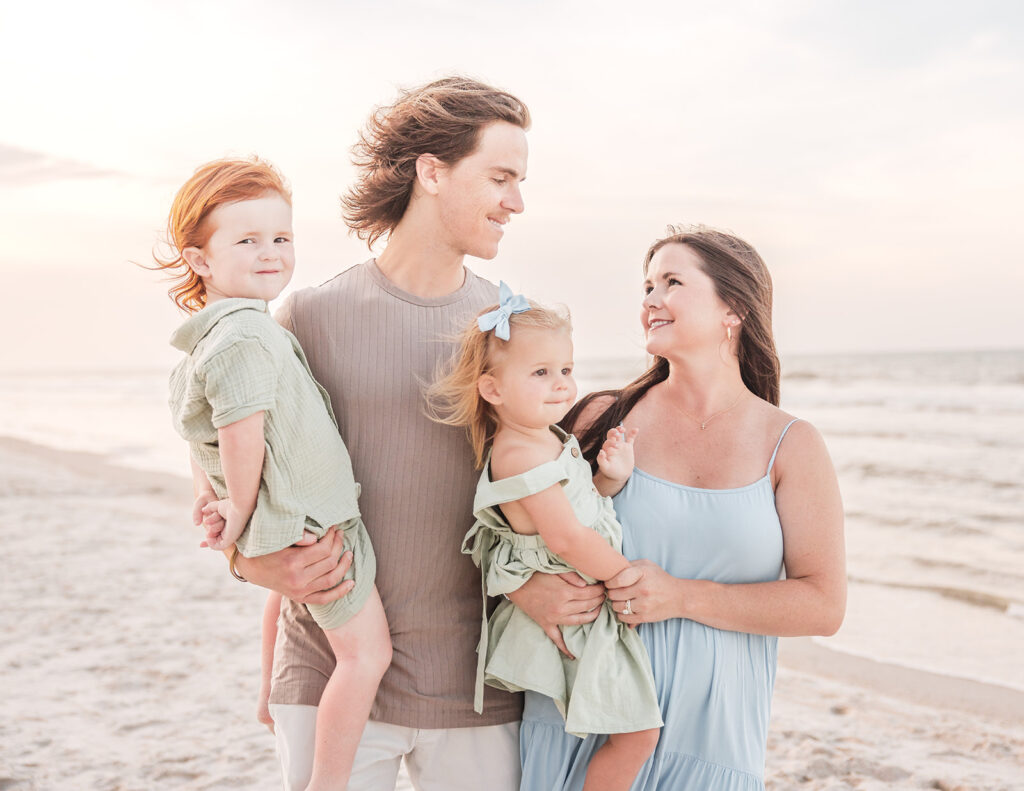
Family photos aren’t about creating a perfect version of your family. They’re about remembering how this season felt—the small hands that held yours, the way your children looked at this specific age, the dynamics between family members during this particular chapter of life.
These seasons pass more quickly than anyone expects. The toddler who clings to your leg will someday tower over you. The baby you can’t imagine growing up will become fiercely independent. The teenagers who roll their eyes at family time will build their own families. Time moves relentlessly forward, and we can’t slow it down.
What we can do is create honest, beautiful documentation of these fleeting moments. Not sanitized, overly staged versions, but real representations of who your family actually is right now. The mess and the magic. The chaos and the connection. The imperfections that make your family uniquely yours.
New Smyrna Beach offers the space, light, and atmosphere to document that honestly, without pressure. Whether you choose Smyrna Dunes Park for its versatility, Flagler Avenue beach for convenience, or Canaveral National Seashore for natural beauty, the location provides an environment where families can simply be together while that time is captured thoughtfully and artfully.
The result is a collection of images that don’t just show what your family looked like, but how this season felt. Years from now, you won’t remember if someone’s hair was perfectly in place or if everyone looked at the camera at exactly the same moment. You’ll remember the feeling of sand between your toes, the sound of your children’s laughter mixing with the waves, the warmth of your partner’s hand in yours, the way the evening light made everything feel golden and possible.
This is what family photos should preserve—not perfection, but presence. Not performance, but genuine connection. Not a staged fantasy, but your real, beautiful, imperfect family exactly as you are.
Ready to Plan Your New Smyrna Beach Family Photos?
If this New Smyrna Beach family photographer guide resonates with you and you’re ready to document your family authentically in one of Florida’s most beautiful coastal settings, the next step is simple.
Learn more about New Smyrna Beach sessions, including what to expect, how the process works, and what makes this location special here: https://michellecoombsphotography.com/new-smyrna-beach-photographer-session/
View current session investment options, availability, and detailed information about what’s included in each collection here: https://michellecoombsphotography.com/investment/
The planning process begins with a conversation about your family, your vision, and your specific needs. From there, every detail is handled thoughtfully—from selecting among the best photo spots and determining the ideal timing with the sunrise vs sunset decision, to coordinating what to wear for beach photos and setting appropriate expectations.
You don’t have to navigate this process alone or guess about what will work best. Comprehensive guidance and these family photo tips ensure you arrive feeling confident, prepared, and ready to simply be present with your family while beautiful images are created naturally.
This season of your family’s life is happening right now. It won’t look exactly like this again. The opportunity to document it thoughtfully and authentically is worth considering before the moment passes.